Centering the Patient in Kidney Disease
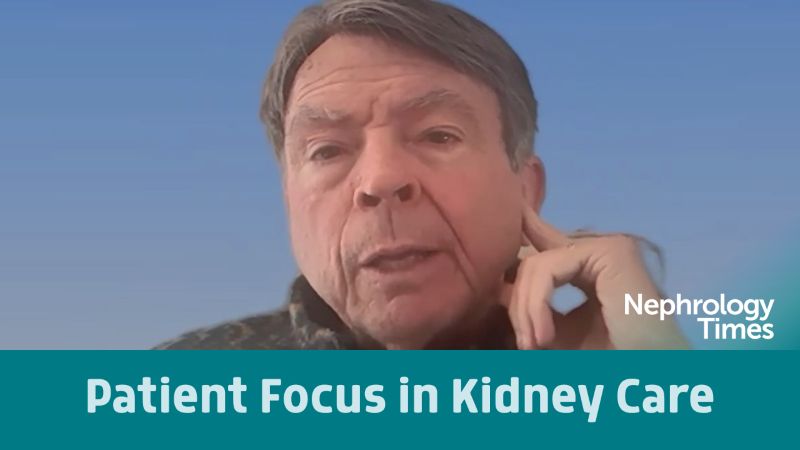
Kevin Fowler is founder and principal of The Voice of the Patient, a patient advocacy and engagement consultancy that works with life sciences organizations across the spectrum of kidney diseases. He received a preemptive kidney transplant in 2004 and has served as a long-time kidney patient advocate. In this conversation, Fowler discusses patient activation in kidney disease, the importance of considering quality of life in disease management, and the implications for how nephrologists communicate and engage with their patients.
What does patient activation look like in kidney care, and how are nephrologists succeeding or falling short?
Patient activation is something that’s very personal to me, just based on my own experiences where I was able to advocate for a preemptive kidney transplant. It’s also had an impact over my patient journey. But patient activation, I look at it simply as someone really having the belief that they have the skills and capabilities to work with their physician in managing their care. It just is a way that I’ve benefited from my experience with kidney disease. I think it’s contributed partly to some of the successful long-term outcomes that I’ve experienced. The benefit to the nephrology community, it begins to take away a lot of that responsibility that they’ve shouldered, and had that burden by themselves, and begin to have the patient have a greater active role in their care.
How can nephrologists overcome time constraints and fear of overstepping to integrate mental health, exercise, and quality of life into care?
I’ll just draw from my own experience, in terms of my own experience with my nephrologist before I had my transplant. One of the things that he did was, was thinking about the end in mind. In my case, early on, he identified the path for me to have a preemptive transplant. He explained early on the importance of exercise, reduced cardiovascular risk. I just found that when I began to implement that, 20-plus years ago, it gave me a greater sense of agency in my own life and healthcare.
What I found is that my nephrologist—if I could mention Dr. Brent Miller [of Indiana University]—was just really effective at being a coach. We just had a really good relationship where I could speak with him very openly and honestly. He really served as a good teacher to me in terms of just educating me on the areas that I just didn’t know at that time. That’s just served as a springboard for me to want to take on more responsibility for my health.
Is there anything you wish clinicians had emphasized to you earlier about how to live well with kidney disease?
I would just say that—if I could speak to maybe the part about how after I had my kidney transplant—I think after transplant, there were some things that were kind of unexpected to me that happened. For example, the medications caused me to really kind of go into a deep depression after my transplant. I think just sometimes there’s this balance between you don’t want to frighten the patient, but on the other hand, you want to find the right balance where the patient’s prepared for different things that may happen so that they can respond to them and recognize that’s a normal part of the process. So, I think that that was the one part for me after my transplant was just the mental element and how critical that was. I still believe to this day, in terms of having success and how to manage that, the ups and downs that happened with life after post-transplant and for that matter, in life overall.
If the goal of kidney care is participation in life, how should that reshape the way nephrologists talk with patients about treatment choices, risk, and trade-offs?
I guess when I look at treatment, I think a lot of times we tend to think about whether it’s, you receive a kidney transplant as a treatment or you receive dialysis, and then it’s seen in isolation. That is the treatment itself. But to me, it’s expanding more broadly what treatment is, consists of. For me, for example, it was adding in the elements of building mental resiliency, exercise, nutrition, all these other elements that can lead to better outcomes. I think it’s moving away from this very siloed approach of the treatment itself, and to think about all these other elements that are part of treatment. It’s like I always say, what really happens with patient engagement is really when you leave those four walls in the hospital or our medical office—that’s really where care begins, is once you leave there and the patient’s on their own.
When we talk about life goals, for myself, my doctor or my nephrologist said that I was a good candidate to have a preemptive transplant. What I’ve been given is not the norm. I recognize that. But because I was given the best treatment for kidney failure, I’ve been able to achieve so much as a result, [to] be able to get our children through college, get that paid for, and really benefit economically. But many other people don’t have that option when they have not had the best treatment for them.
When you look at the treatment itself, it’s like, how’s that treatment aligned with what the person wants to achieve in their life? When I look at myself, being [one of the] less than 3% of people who receive a preemptive kidney transplant, I’m very aware that I don’t represent the norm and that I’ve been given benefits. Many are economic in nature because I did have the optimal treatment for kidney failure.
When we look at that for many people out there, when they don’t have that, that can put a generational burden upon patients if someone’s forced to stop working and the impact that could have upon their children who may not have the financing for college. I don’t think we really think about kidney disease from this lens of the economic impact it can have upon someone.
Where do you see nephrology heading?
I’ll just speak for the United States, but right now, we’re really at a pivotal point in the, the future of nephrology and patient care with kidney diseases. I think we have an opportunity—and this comes down to the how we use our will—but we have an opportunity to really transform the whole perception of what the role of nephrologists [is] and really provide tangible health for patients.
I think in front of us we have the opportunity to certainly save life years, extend life years of patients’ kidneys if they are identified early with kidney disease and then, most importantly, intervened. So, I think my challenge to the nephrology and patient community is to embrace the opportunity to cure some of these kidney diseases. If we fully embrace kidney health policies, implementation.
And then I would add access to everyone, making sure that people who really do suffer the burden of kidney diseases—rural populations, African American, Hispanic—groups that … have a larger burden, is to ensure we have access for everyone so that we can really provide hope and really improve our economics for these patient populations. That’s my challenge, is to move towards everyone being on board with embracing kidney health over kidney failure.
link